




Type-safe async pub/sub for Rust. One API across RabbitMQ, AWS SNS+SQS, NATS JetStream, Apache Kafka, Redis/Valkey Streams, and an in-process backend.
Guides, examples, and the full walkthrough live at shove.rs. Rustdoc on docs.rs/shove.
- Define a topic once, use it everywhere. Queue names, DLQs, and retries all derive from a single Rust type.
- Retries and DLQs included. Escalating backoff, dead-letter routing, retry budgets, handler timeouts — no glue code.
- Strict per-key ordering when you need it, with pluggable failure policies.
- Autoscaling consumer groups driven by queue depth or consumer lag.
- Switch backends without changing your code. Same topic, same handler, six transports.
- Pluggable message codecs. JSON by default; Protobuf, zero-copy SBE, raw bytes, or your own.
- Confluent Schema Registry for Kafka — opt-in encode on publish and decode on consume (Confluent and Redpanda), with subject enforcement.
In-process, no Docker, no credentials:
use serde::{Deserialize, Serialize};
use shove::inmemory::{InMemoryConfig, InMemoryConsumerGroupConfig};
use shove::{
    Broker, ConsumerGroupConfig, InMemory, MessageHandler, MessageMetadata, Outcome,
    TopologyBuilder, define_topic,
};
use std::time::Duration;

#[derive(Debug, Clone, Serialize, Deserialize)]
struct OrderPaid { order_id: String }

define_topic!(Orders, OrderPaid,
    TopologyBuilder::new("orders")
        .hold_queue(Duration::from_secs(5))  // retry with backoff
        .dlq()                               // dead-letter on permanent failure
        .build());

struct Handler;
impl MessageHandler<Orders> for Handler {
    type Context = ();
    async fn handle(&self, msg: OrderPaid, _: MessageMetadata, _: &()) -> Outcome {
        println!("paid: {}", msg.order_id);
        Outcome::Ack
    }
}

#[tokio::main]
async fn main() -> Result<(), shove::ShoveError> {
    use futures::FutureExt as _;

    let broker = Broker::<InMemory>::new(InMemoryConfig::default()).await?;
    broker.topology().declare::<Orders>().await?;

    let publisher = broker.publisher().await?;
    publisher.publish::<Orders>(&OrderPaid { order_id: "ORD-1".into() }).await?;

    let mut group = broker.consumer_group();
    group
        .register::<Orders, _>(
            ConsumerGroupConfig::new(InMemoryConsumerGroupConfig::new(1..=1)),
            || Handler,
        )
        .await?;

    let outcome = group
        .run_until_timeout(tokio::signal::ctrl_c().map(drop), Duration::from_secs(5))
        .await;
    std::process::exit(outcome.exit_code());
}
Swap InMemory for RabbitMq, Sqs, Nats, Kafka, or Redis and the topic and handler stay identical. Per-backend setup: Getting Started.
| Backend | Feature flag | Marker |
|---|---|---|
| RabbitMQ | rabbitmq |
RabbitMq |
| AWS SNS+SQS | aws-sns-sqs |
Sqs |
| NATS JetStream | nats |
Nats |
| Apache Kafka | kafka |
Kafka |
| Redis/Valkey Streams | redis-streams |
Redis |
| In-process | inmemory |
InMemory |
cargo add shove --features <flag>. Need help choosing? Choosing a backend.
Optional add-ons: audit, metrics, kafka-ssl, rabbitmq-transactional, protobuf, sbe, env-config. Codec details, including the zero-copy SBE path: Codecs. Configuring the tuning knobs from environment variables: Environment Configuration.
At-least-once by default. Handlers return one of:
Ack— successRetry— delayed retry through hold queues with escalating backoffReject— dead-letter immediatelyDefer— delay without consuming a retry budget
Full semantics: Outcomes & Delivery.
The charts are generated from a committed results document — never hand-copied — and each one carries its own provenance (shove version, generation date, hardware) in the caption. The harness runs against every backend; the currently published document measures the in-process and Kafka backends, and a plotted series appears only for a backend the document actually contains. See Measurement methodology for what is measured and what is still pending.
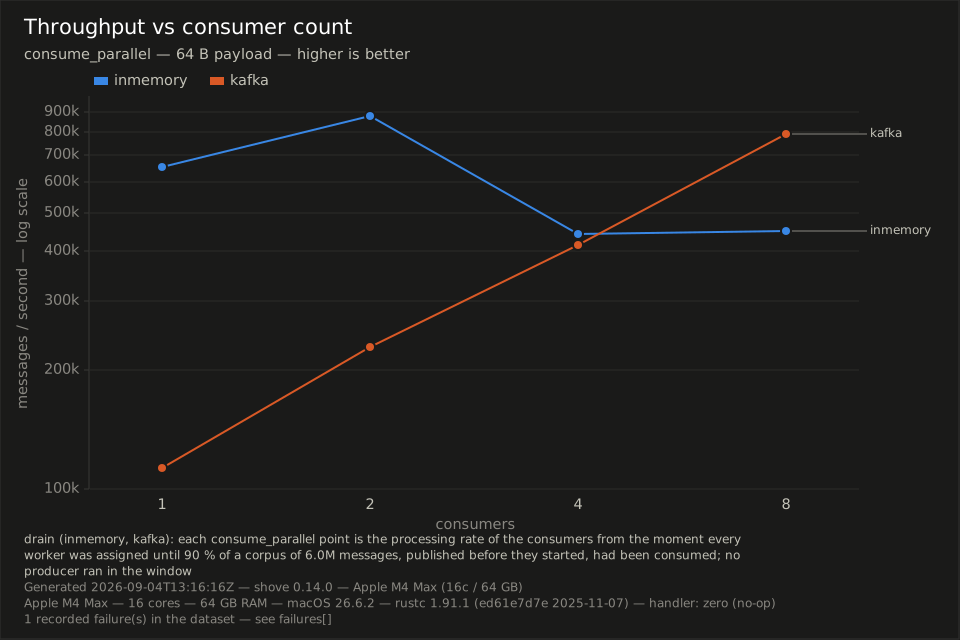
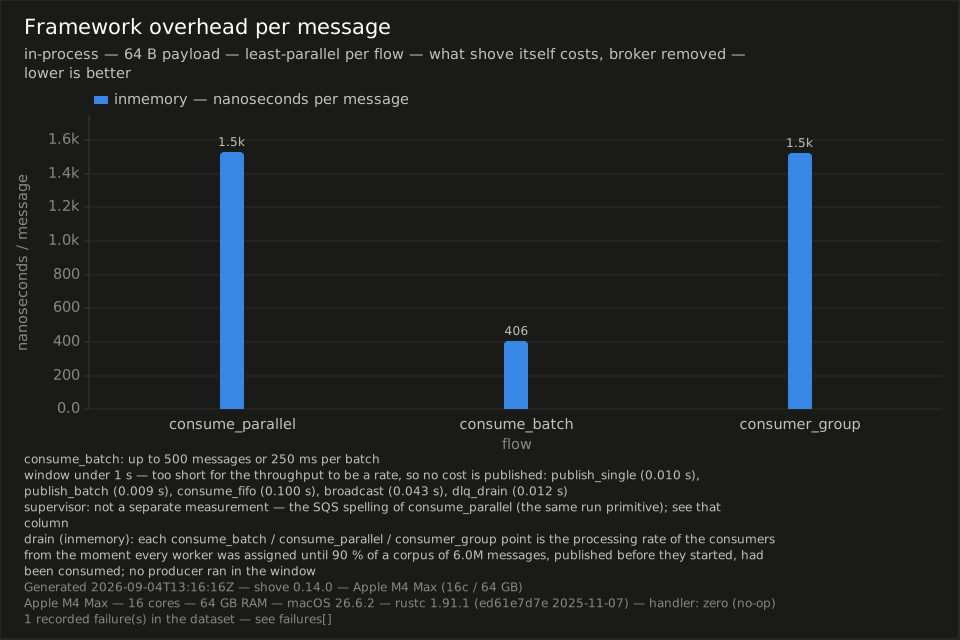
Throughput vs payload size, the cost of sequenced ordering, and dispatch latency
percentiles: Performance. Reproduce with
cargo run --release --example <backend>_stress --features <flag> using the
feature flag from the table above; the exact published matrix and the chart
regeneration command are in
Measurement methodology.
- Getting Started
- Core concepts
- Guides — retries, sequenced delivery, consumer groups, audit, observability, exactly-once, shutdown, liveness
- Backends
- docs.rs/shove
- Rust 1.91+ (edition 2024)
- Redis 6.2+ or Valkey (when using
redis-streams)
Built and maintained by Zannis Kalampoukis at Synchronicity Labs.