







Stuff around automotive R&D, software delivery and multi-sensor systems.
I still like being close to the technology.
This account is where I build, break and test things around:
- 🤖 Agentic AI and tool-based workflows
- 🧠 RAG, evaluation and guardrails
- 🛰️ Edge AI and ROS 2
- 📡 real-time sensor pipelines
- 📦 Dockerized software and AI services
- ⚙️ engineering automation
The question I keep coming back to is simple:
What can technology remove, simplify or improve — and is the added complexity actually worth it?
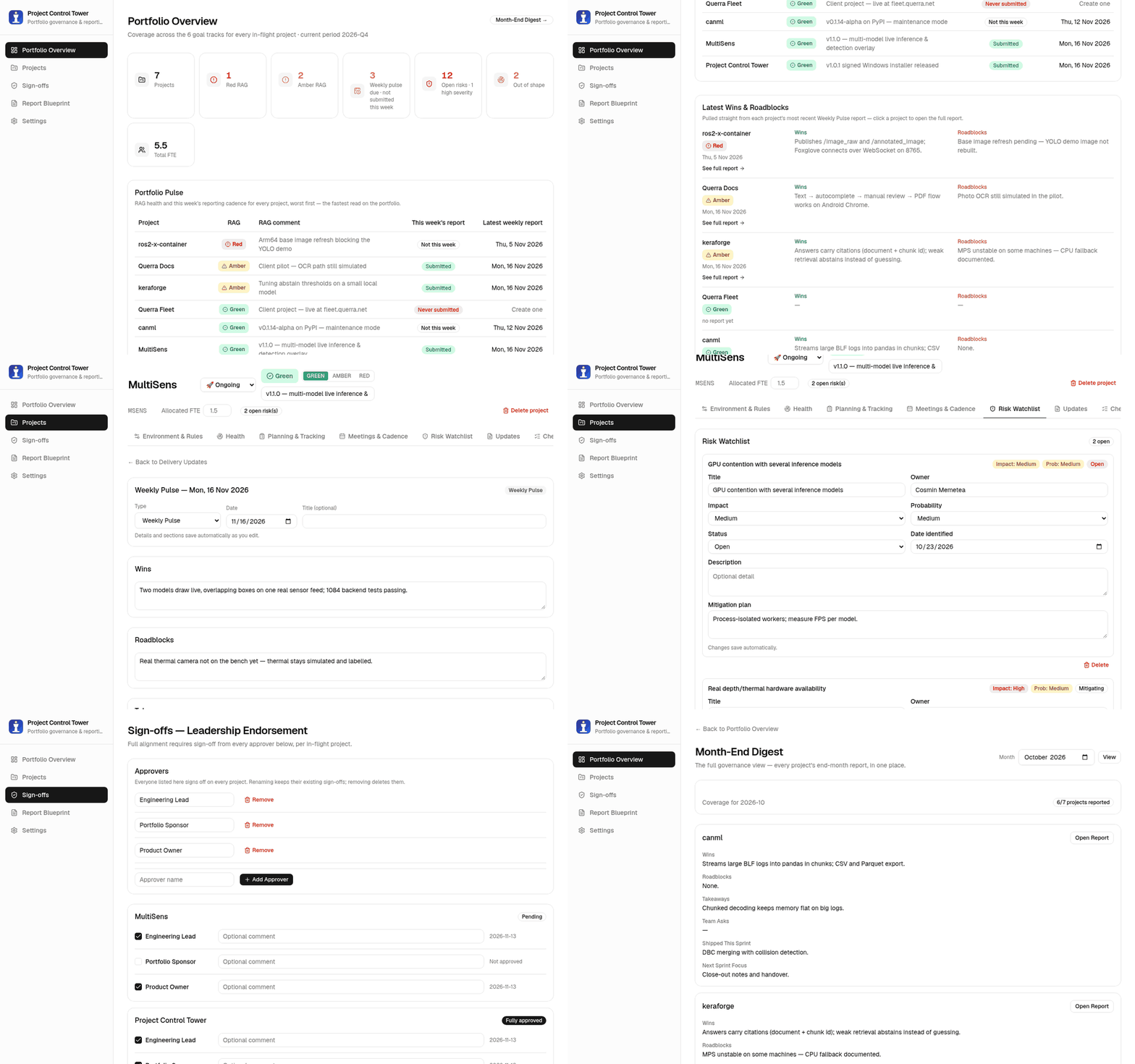
Portfolio governance and reporting across a shared set of goal tracks





Tracks multiple projects on environment setup, planning, meeting cadence, reporting, risk and delivery health:
- Portfolio Overview — goal coverage, RAG status, open risks and a Project Health radar
- Risk Register — impact, probability, mitigation and a high-severity rollup
- Project Health — Scope / Schedule / Cost / Risk / Quality / Resources, scored 1–5
- Meeting Map, dated reports from a customizable template, and executive Approvals
The Windows app runs fully offline, installs Only for me with no administrator rights, and is code-signed for free through SignPath.io (certificate by SignPath Foundation).
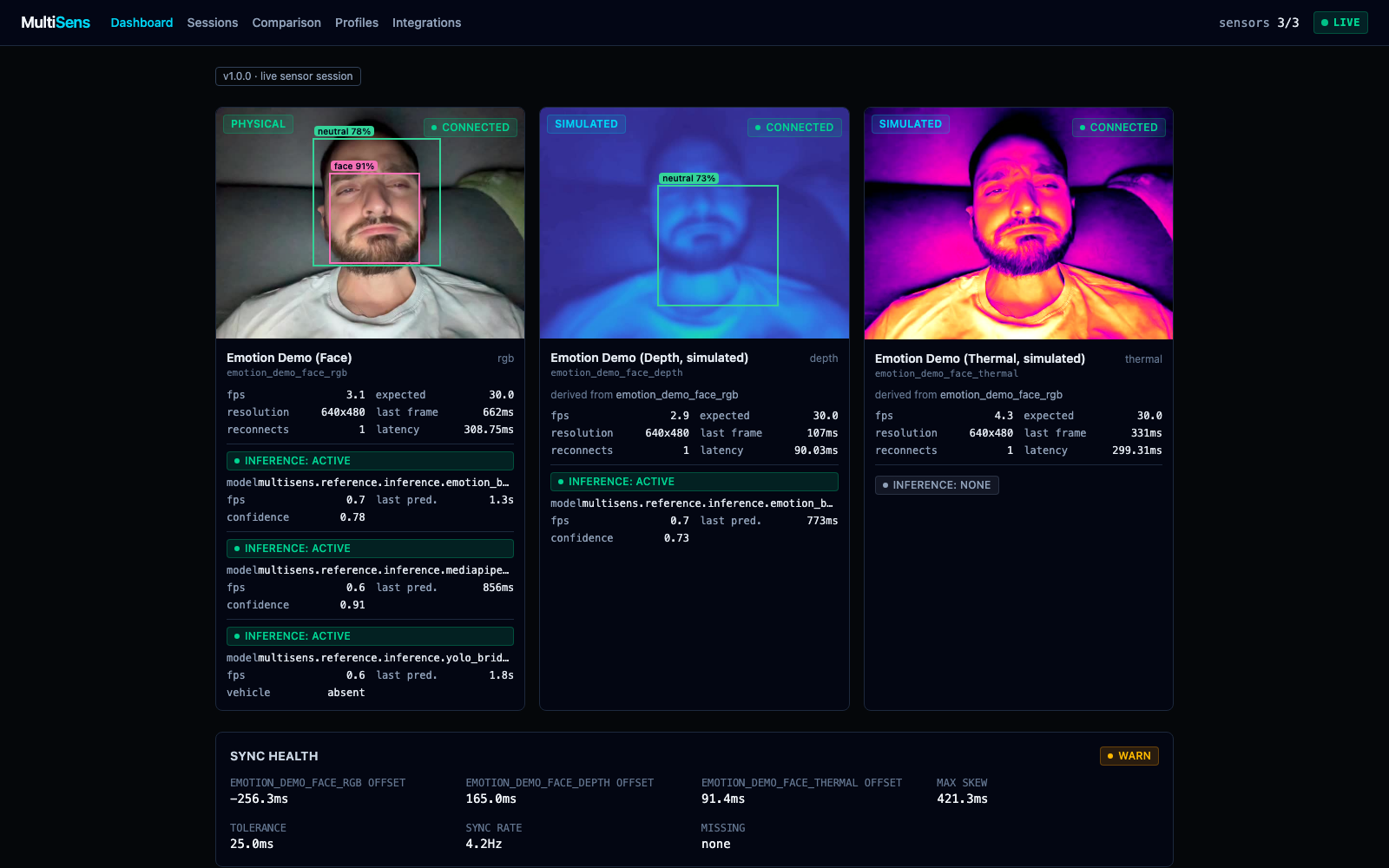
Open-source multi-sensor platform: ingest, sync, diagnose, evaluate



Vendor-neutral platform for anything that speaks RTSP — from ingestion and cross-sensor sync through live inference overlays.
One rule enforced end to end:
Every number shown is a real measurement or an explicit
N/A— never a made-up one.
Dockerized ROS 2 vision stack for edge AI


MJPEG in, ROS 2 topics out: publishes /image_raw and /annotated_image, exposes a Foxglove WebSocket, and can run YOLOv3/Tiny detection from environment variables.
Built as a reusable playground for perception pipelines, optimized for arm64 — Mac M2 or NVIDIA Jetson.

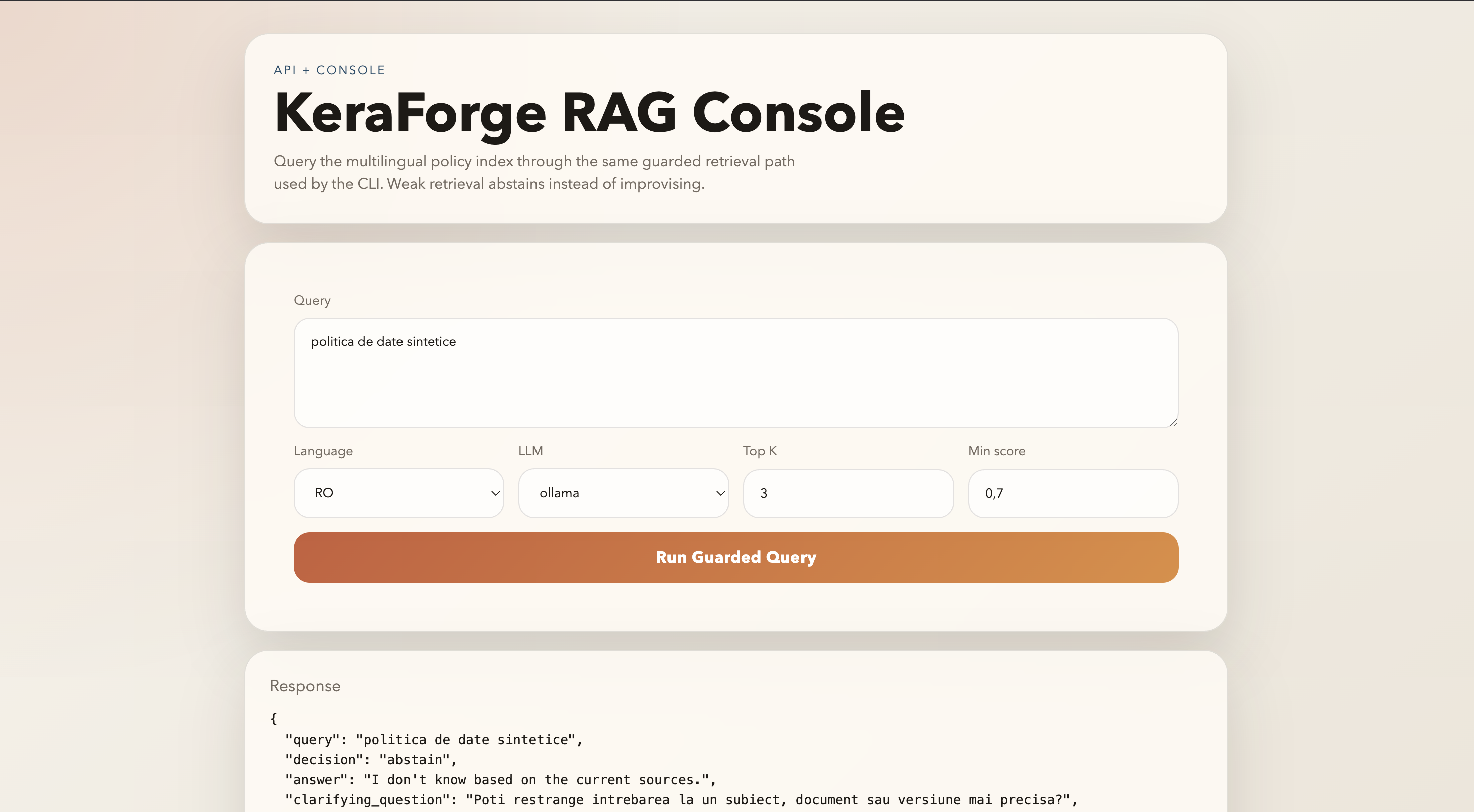
Local RAG + bounded agent that abstains and cites



A local, observable RAG stack: Qdrant retrieval, LlamaIndex, a small Ollama model and a FastAPI query API.
If retrieval is weak, it abstains and asks a clarifying question instead of inventing an answer. Answers carry citations, and runs are traced.
🚗 canml
CAN bus logs → pandas DataFrames


Python toolkit that decodes CAN BLF logs with DBC definitions, streams large files in chunks or loads them in one call, and exports to CSV or Parquet — with signal-level filtering and DBC merging.
pip install canmlAlso on PyPI.
Geotagged photos → 3D globe and a video recap


👀 Preview
Drop travel photos in the browser; GPS is read on-device and mapped onto an interactive globe, with a short Remotion recap. Photos never leave your device. |
Flappy Bird in the browser, with an ERC-721 bird contract


👀 Preview
Click, tap or press Space to flap. No wallet is required to play; connecting one is optional and testnet-only. The ERC-721 contract lives in the repo and is not deployed. |
Star Wars–themed rank badges for a GitHub profile README


👀 Preview
Tiers from Force Beginner to Master Yoda, XP bars, streaks, achievement trials and head-to-head duels — all as plain SVG. |
Trip profit, fuel estimates and refuelling anomalies — with visible data sources


👀 Preview
For fleet owners and drivers: owners sign in with email, drivers with phone + PIN. Try the demo without an account. |
Service sheet on your phone — calm, fast, offline


👀 Preview
Digital service sheets for professional cleaning equipment technicians: inspection, repair, maintenance and commissioning, saved as PDF. |
🔧 Smaller tools and experiments
- 📹 multirtsp — one camera → synchronized RGB, pseudo-depth and pseudo-thermal RTSP streams (FFmpeg + MediaMTX)
- 🗺️ scrum-guide-mindmap — a mind map for every topic in the Scrum Guide 2020
I use AI heavily.
Not just for autocomplete.
I use ChatGPT, Claude, Gemini and Grok as different agents for things like:
- exploring designs
- breaking requirements down
- writing code
- reviewing code
- finding edge cases
- challenging architectural decisions
- generating tests
- debugging
- documentation
And yes:
I don't manually inspect every line produced by an AI agent.
For some tasks I use another agent to review the implementation, then tests, runtime behaviour and targeted inspection to decide whether I trust the result.
I like automation.
If something repetitive can be removed from my work, I usually want to remove it.
But there is one boundary I don't outsource:
The responsibility for what I ship is still mine.
AI can propose, generate, review and challenge.
It cannot own the consequence.
💻 Programming


🧠 AI / Data


🛰️ Edge / Systems


🔧 Software Engineering


📋 Project & Delivery


🤖 AI tools in my workflow


I want to stay in the space between technology and delivery.
Not detached from engineering.
Not pretending to be the best ML researcher in the room.
I want to understand enough of the system to ask the right questions, challenge technical decisions, structure the work, and make sure what gets built creates value.
The areas pulling me most right now are:
Technical Project Leadership · AI Platforms · Agentic Systems · Engineering Automation